
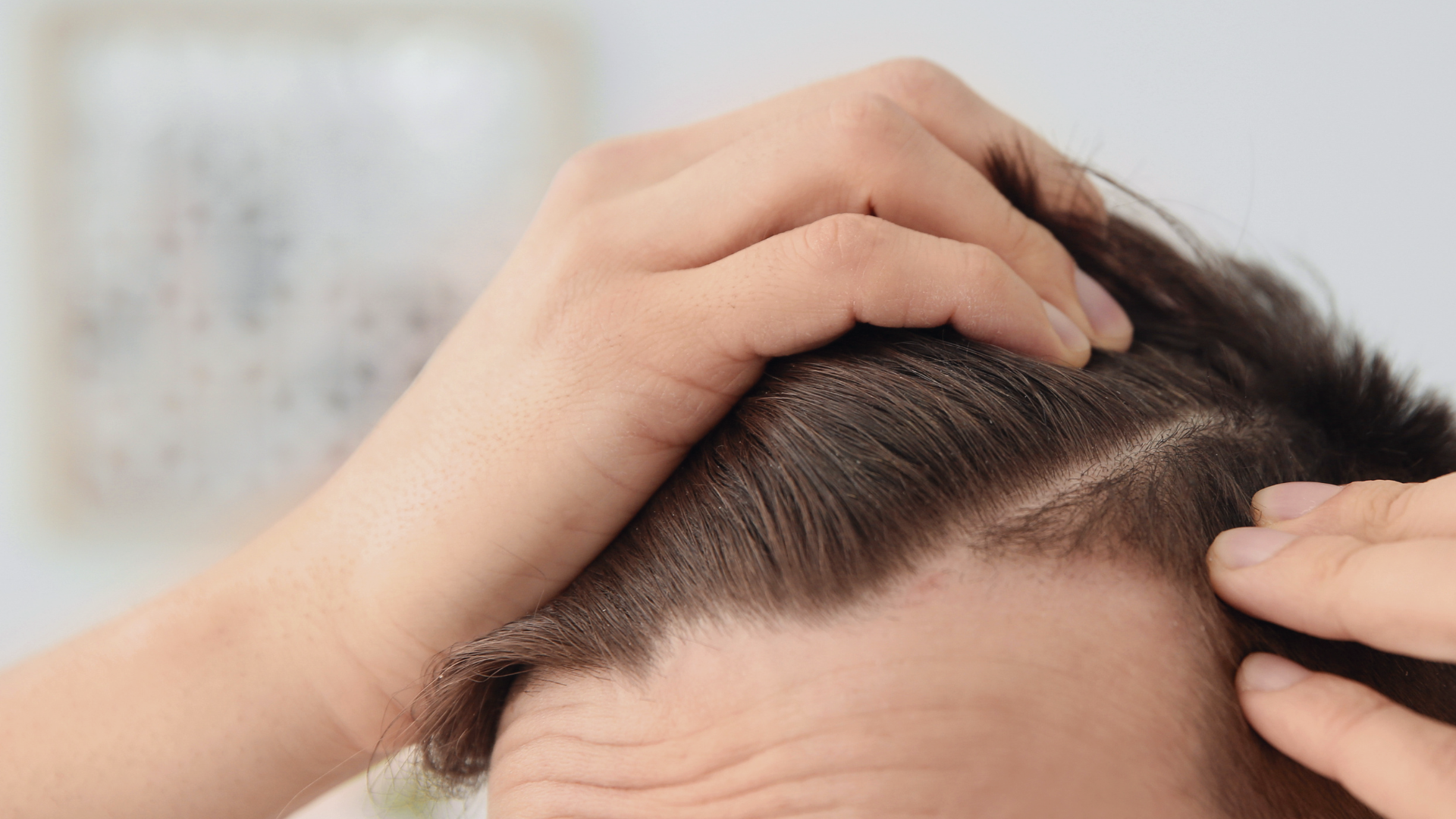
What does a dermatologist look for during a hair loss consultation?
Hair loss can happen for many different reasons, and identifying the cause is an important first step before considering treatment.
While it can be tempting to start with shampoos, supplements or hair-growth products, different types of hair loss can require very different approaches. This is where seeing a dermatologist for hair loss can be helpful. Dermatologists are medical specialists trained to diagnose and manage conditions affecting the skin, hair and nails.
A hair loss consultation isn't simply about looking at how much hair you have lost.
Your dermatologist will consider your medical history, the pattern and timing of your hair loss, your scalp and hair health and other possible contributing factors. Where appropriate, further investigations may also be recommended.
The aim is to establish a diagnosis wherever possible before developing an individual management and treatment plan. This assessment typically involves looking at several aspects of your hair loss, starting with your history.
#1 Your hair loss history
One of the first parts of a consultation is usually a detailed discussion about what has been happening with your hair. Your dermatologist may ask:
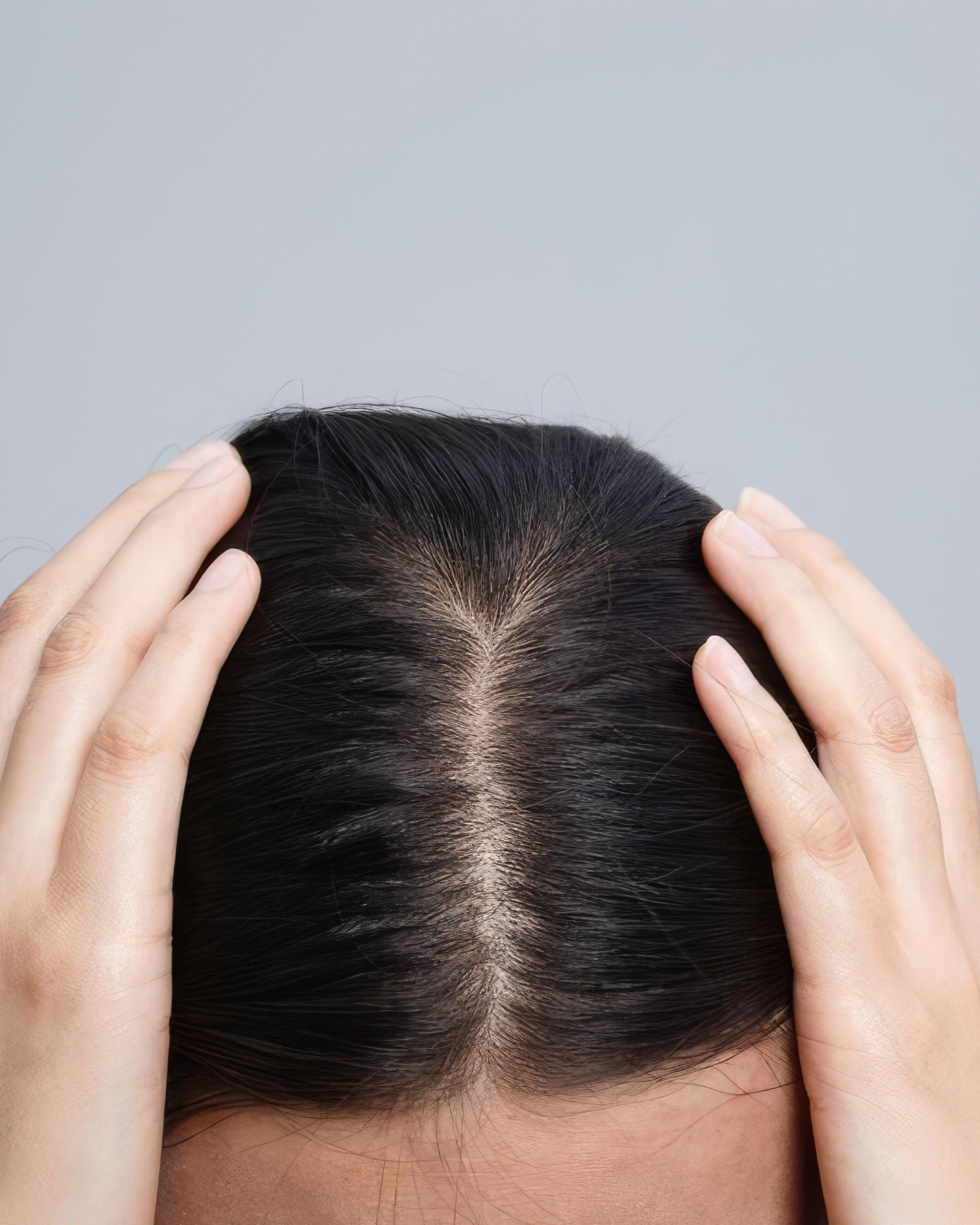
When did you first notice the hair loss?
Did it happen suddenly or gradually?
Are you experiencing shedding, thinning or distinct bald patches?
Has your hairline changed?
Is your part becoming wider?
Do you have itching, tenderness, scaling or other scalp symptoms?
Have you experienced hair loss previously?
The timing and pattern can provide important clues. Sudden shedding, for example, may have different causes from gradual thinning that has developed over several years.
#2 Your medical and family history
Hair loss doesn't always begin with the hair itself. Changes elsewhere in the body can sometimes affect the normal hair-growth cycle. Your dermatologist may ask about your general health, recent illnesses, surgery, significant changes in weight, stress and other medical conditions. They may also review medications and supplements you are currently taking.
Family history can also be relevant. Pattern hair loss can have a genetic component, so understanding whether parents, siblings or other relatives have experienced hair thinning may help build the overall clinical picture.
#3 Possible contributing factors
Depending on your symptoms and medical history, your dermatologist may consider whether hormonal changes, nutritional deficiencies or another health condition could be contributing to your hair loss. Thyroid conditions and iron deficiency, for example, can sometimes be associated with changes in hair growth or increased shedding.
Rather than assuming a deficiency is present and starting supplements yourself, medical assessment can help determine whether further investigation is appropriate.
#4 Examining your scalp and hair
A physical examination is an important part of seeing a dermatologist for hair loss. Your dermatologist will generally examine both your hair and scalp, looking at the location and pattern of hair loss as well as the condition of the scalp itself.
The overall pattern can provide important clues about the type of hair loss and whether further investigation may be appropriate.
During the examination, your dermatologist may look for reduced hair density, variations in hair shaft thickness, broken hairs, inflammation or redness, scaling or scarring of the scalp, and changes around individual hair follicles.
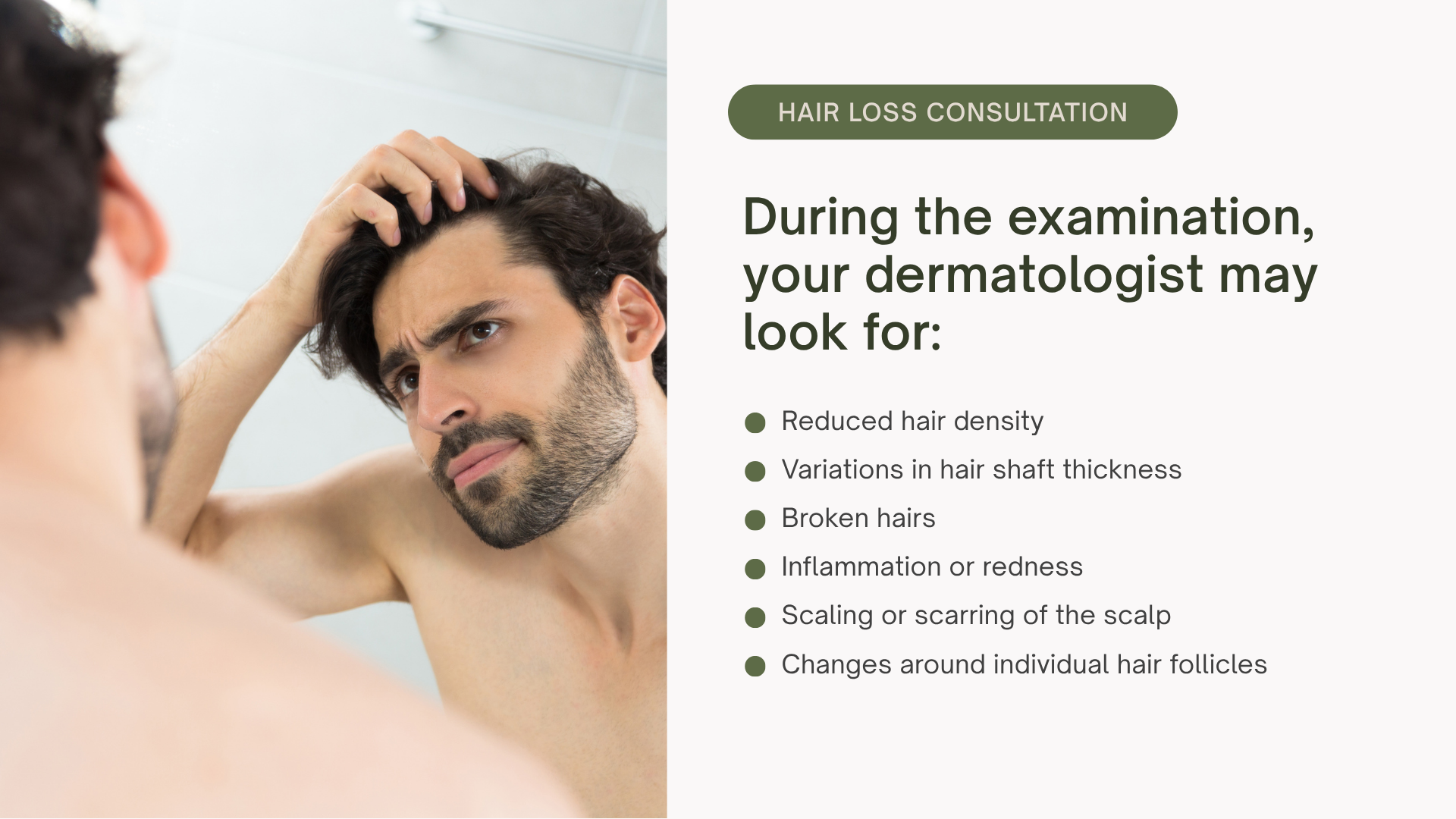
The overall pattern can provide important clues about the type of hair loss and whether further investigation may be appropriate.
Where relevant, the dermatologist may also examine areas such as the eyebrows, eyelashes or nails because some hair-loss conditions can cause changes beyond the scalp.
A closer look with a dermatoscope
As part of the examination, your dermatologist may use a dermatoscope, a handheld device that magnifies the hair and scalp. When used for hair and scalp assessment, this is known as trichoscopy.
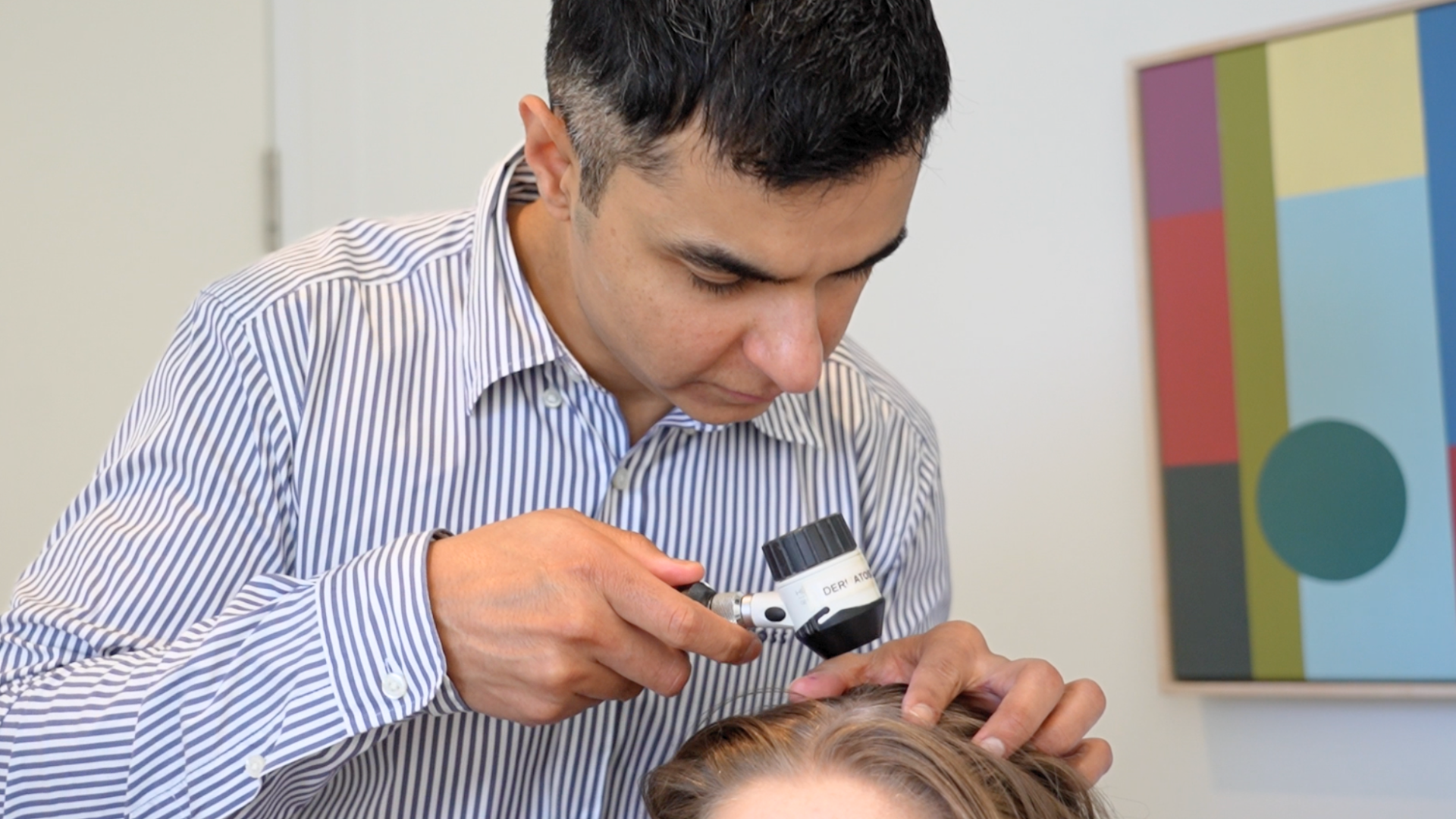
Dr Bevin Bhoyrul
This allows your dermatologist to see details that can be difficult to see with the naked eye, including hair-shaft thickness, follicular openings and patterns around individual follicles.
These findings can provide additional information when distinguishing between different types of alopecia and hair thinning.
Hair loss can happen for many different reasons, and sometimes there isn't just one cause.
Pattern hair loss, alopecia areata, telogen effluvium, traction alopecia and inflammatory or scarring conditions can all present differently. For some people, several factors may be contributing at the same time.
This means treatment isn't necessarily the same for everyone. Establishing a diagnosis can help your dermatologist determine which approach is most appropriate for you.
When should you see a dermatologist for hair loss?

Consider seeking medical assessment if you notice:
persistent or unexplained hair shedding
progressive thinning or bald patches
changes to your hairline
scalp symptoms such as redness, scaling, itching or tenderness
It can also be worthwhile seeking advice if you simply aren't sure why your hair is changing.
Some forms of hair loss are temporary, while others can be progressive. Certain scarring alopecias can permanently damage hair follicles, making timely diagnosis particularly important.
Why follow-up can be part of the treatment plan
Hair grows slowly, so it can take time to notice changes in shedding or hair density. Depending on the cause of your hair loss and the treatment recommended, your dermatologist may suggest follow-up appointments to see how things are progressing and how you are responding to treatment.
Some types of hair loss may only require treatment for a limited period, while others may benefit from longer-term care. Follow-up appointments give your dermatologist an opportunity to review your progress and make adjustments to your treatment if needed.
Our dermatologist, Dr Bevin Bhoyrul, has a special interest and extensive experience in treating hair loss. Book a consultation to discuss your hair loss and explore your treatment options.