Is a double chin genetic?
Weight gain isn’t the only reason a double chin can develop. While it’s often linked to excess weight, the causes of a double chin are often more complex.
Genetics, ageing, and changes in the skin can all contribute to submental fullness, which may appear as fat under the chin, loose skin, or a less defined jawline. Even people who maintain a healthy lifestyle can notice these changes over time.
Understanding the causes of a double chin is the first step in determining when double chin treatment may be beneficial and which approach will best suit your unique facial structure.
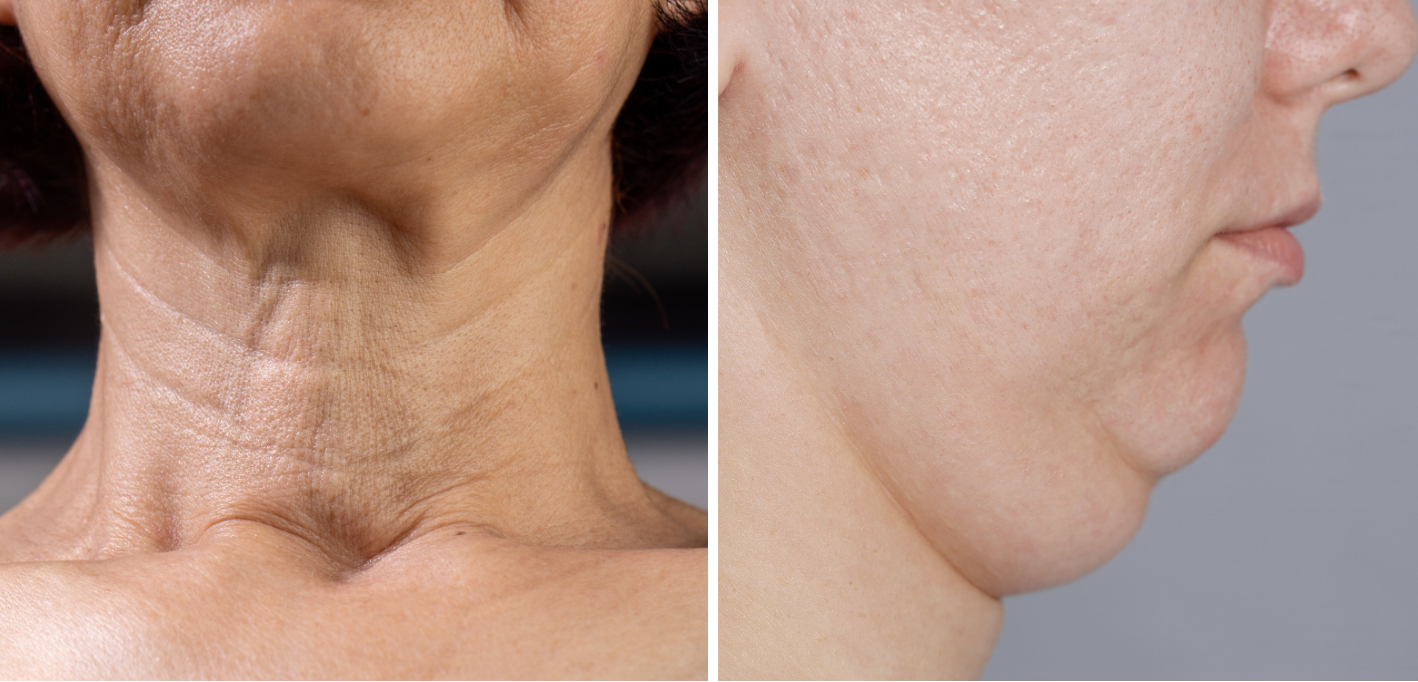
Submental fullness.
What causes a double chin?
A double chin occurs when a layer of fat forms beneath the chin, or when loose skin and weakened muscles cause the jawline to appear softer, creating the appearance of a second chin. It is a common cosmetic concern that can affect anyone, regardless of age or body weight. While it is often associated with weight gain, a double chin can develop for several reasons, and not all are related to lifestyle.
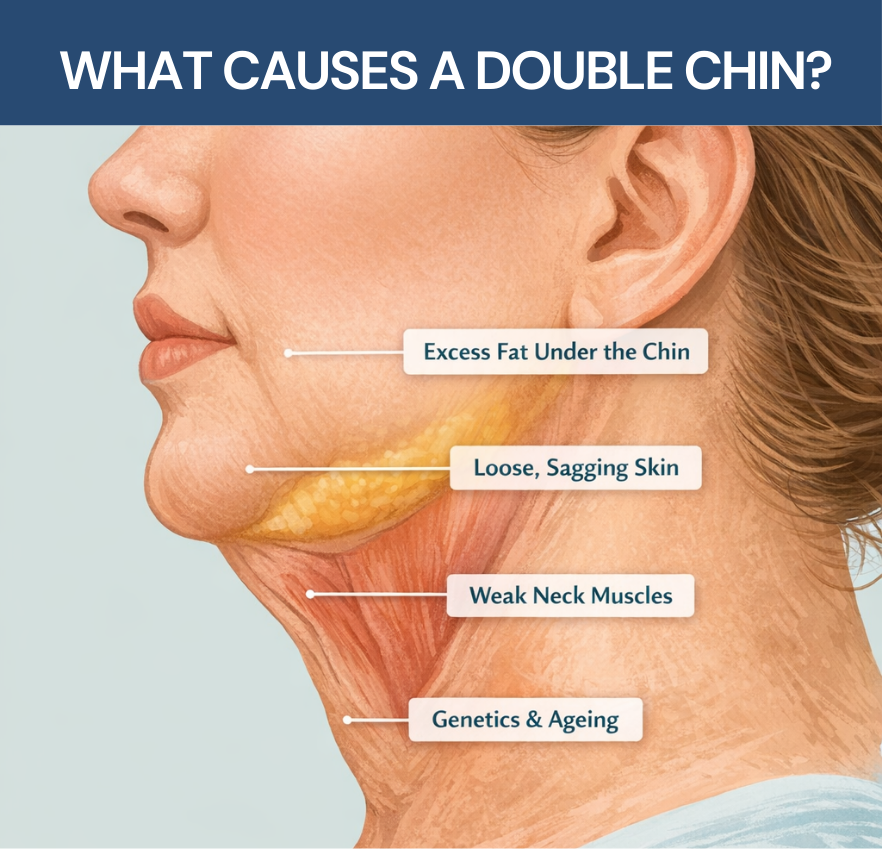
Some people develop a temporary double chin after weight fluctuations, while for others, it can persist due to factors such as:
Genetics – inherited traits can influence fat distribution, jawline shape, and skin elasticity.
Ageing – declining collagen and elastin reduce skin firmness, while facial muscles lose tone.
Reduced skin elasticity – looser skin allows fat and tissue to settle, softening the jawline.
Combined, these factors can make a double chin more persistent and unlikely to improve without intervention.
Why are some people more prone to a double chin?
Some people are naturally more likely to develop a double chin due to inherited traits. They may store more fat under the chin or have a softer jawline structure, making submental fullness more noticeable even if they maintain a healthy weight.
The role of genetics in a double chin.
Genetics play a key role in this predisposition, influencing how fat is distributed under the chin, the natural shape of the jawline, and the elasticity of the skin. These hereditary factors help explain why some individuals notice fat under the chin or a less defined jawline, even if they are slim and lead a healthy lifestyle.
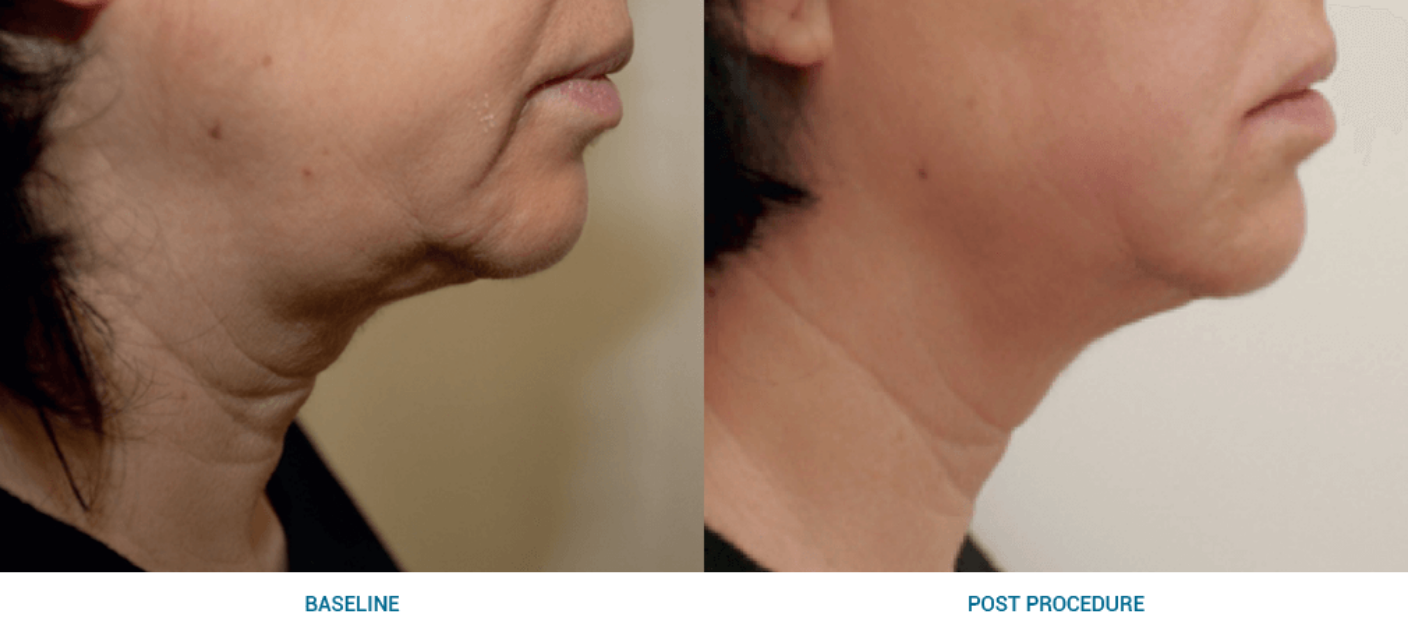
*ULTRAFORMER III Treatment, Courtesy of Ultraformer III. Patient results and experiences may vary.
What other factors come into play?
A double chin isn’t just about fat. The muscles in your neck and lower face play an important role too. When these muscles are weaker, they provide less support, allowing fat and skin to settle, making the area under your chin look fuller.
Ageing can make this even more noticeable. As we get older, our skin loses collagen and elastin, so it becomes less firm and elastic. At the same time, the muscles that support the jawline and neck lose tone, which can soften your jawline and make a double chin more visible.
What are the treatment options available for a double chin?
Understanding how muscle tone, skin elasticity, and ageing affect your jawline is key when considering treatment. Changes in fat, skin, and muscles vary from person to person, which is why a personalised approach is essential.
Some patients benefit most from treatments that strengthen muscles and improve skin firmness, while others require deeper structural tightening and contouring.
At the Dermatology Institute of Victoria, we offer ULTRAFORMER III and Emface, advanced technologies that target different aspects of submental fullness to enhance jawline definition.
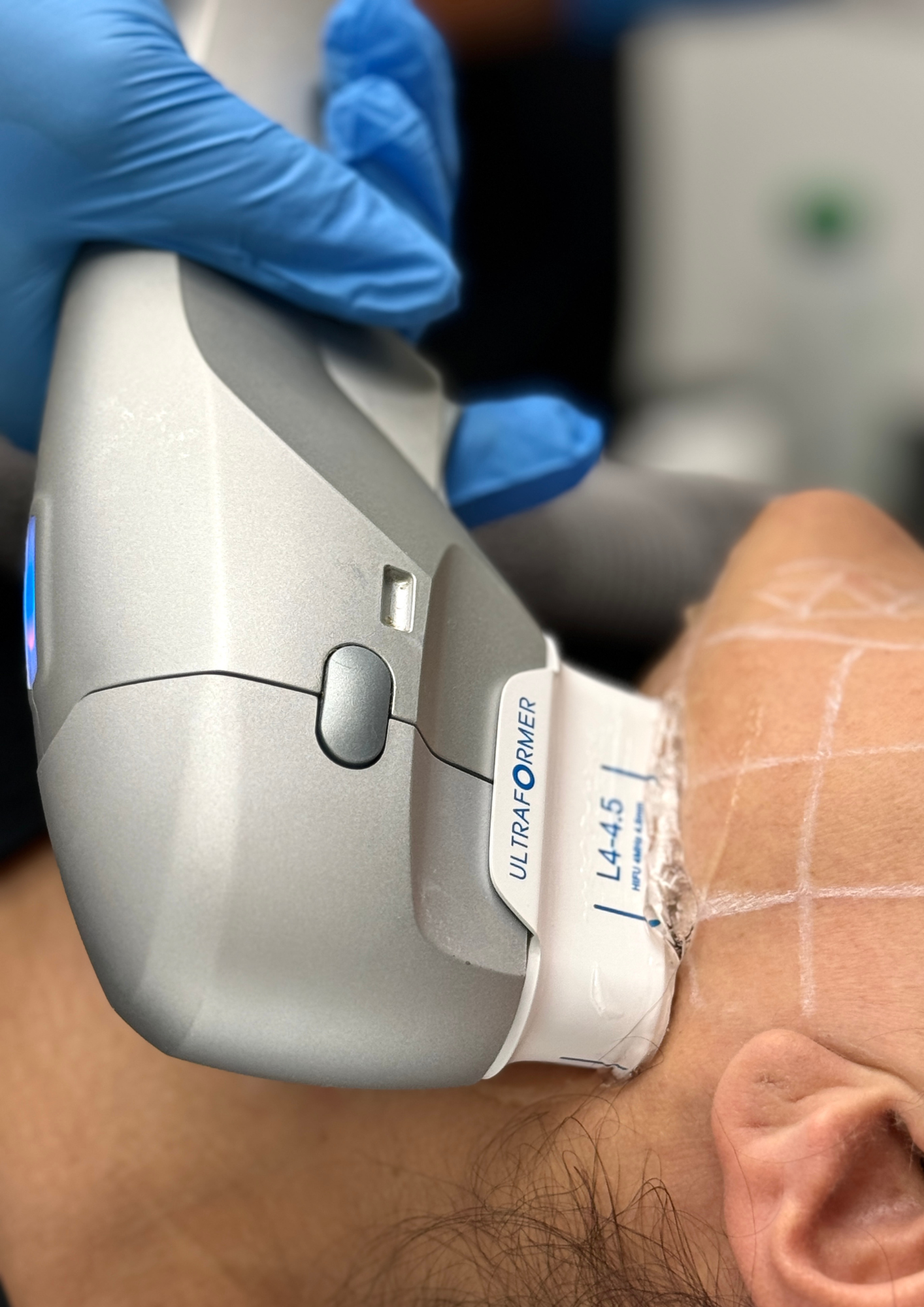
ULTRAFORMER III Treatment
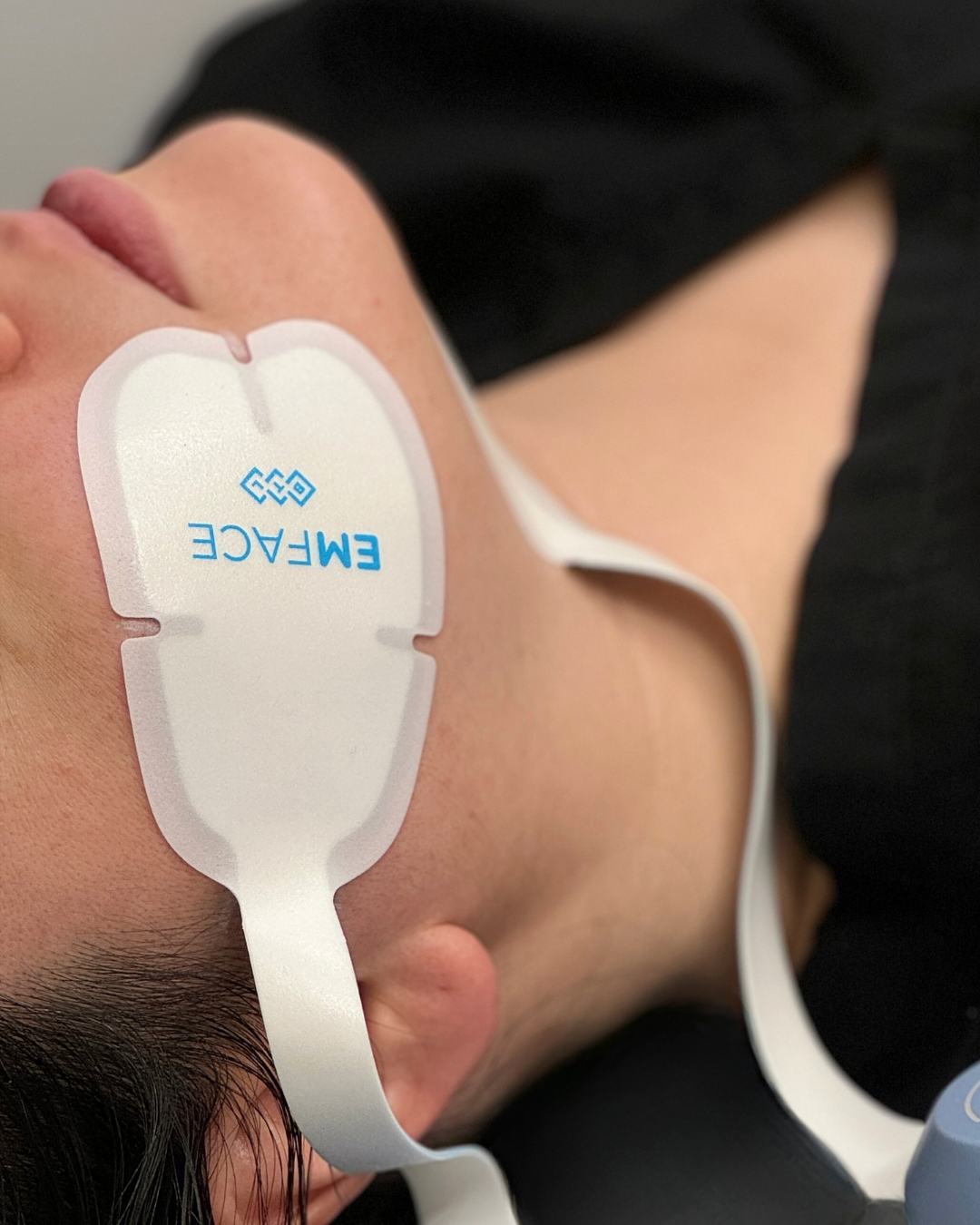
Emface Treatment
ULTRAFORMER III - Skin Tightening
Ultraformer III is an ultrasound-based treatment that targets deep layers of skin and muscle under the chin. It stimulates collagen production and lifts underlying tissues, helping to tighten loose skin, tone muscles, and improve jawline definition.
Ideal for patients whose double chin is caused by skin laxity or weakened muscle support, providing a more defined and contoured appearance without surgery.
Emface - Tone and Tighten
Emface combines electromagnetic and radiofrequency energy to stimulate and tone the muscles of the lower face and jawline while improving skin firmness. It targets both muscle and surface skin, helping to reduce the appearance of a double chin and enhances jawline definition naturally.
Ideal for patients whose double chin is influenced by weakened facial muscles or mild skin laxity, providing a lifted and more contoured appearance.
Which skin tightening treatment is most suitable for you?
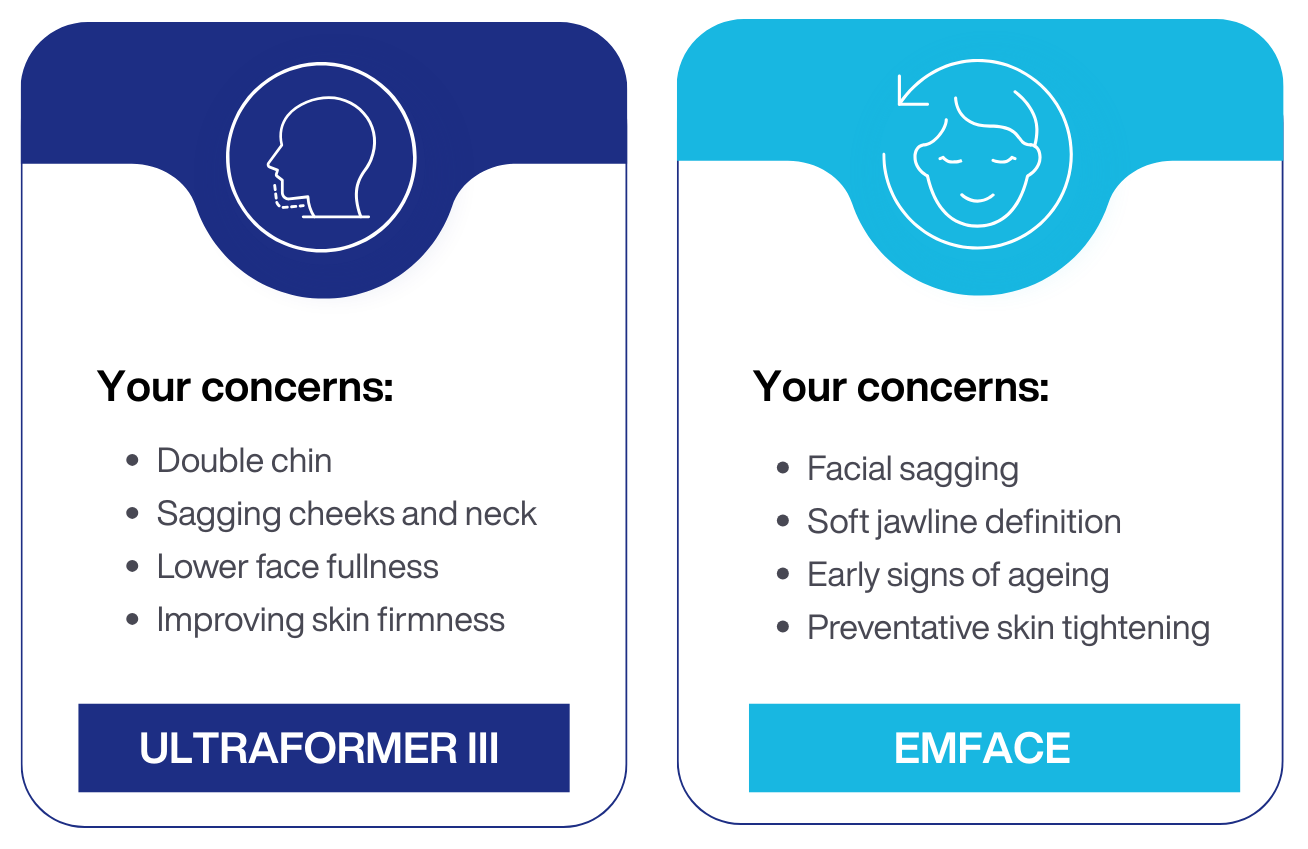
If you’re noticing any of the following, you can come in for a cosmetic consultation with our team:
Persistent fat under the chin that doesn’t improve with diet or exercise
Loose or sagging skin around the jawline and neck
Reduced jawline definition or a softer chin contour
Fullness under the chin that runs in your family
Changes due to ageing, such as skin laxity or muscle weakening
How we can support your treatment journey.
A double chin can develop for several reasons, not just weight gain. Genetics, ageing, reduced skin elasticity, and changes in muscle tone all play a role, making some double chins more persistent.
Understanding the underlying causes is key to choosing the right treatment, whether that’s fat reduction, skin tightening, or muscle toning. Our team will assess your skin laxity and facial structure to create a personalised treatment plan tailored to your goals.