
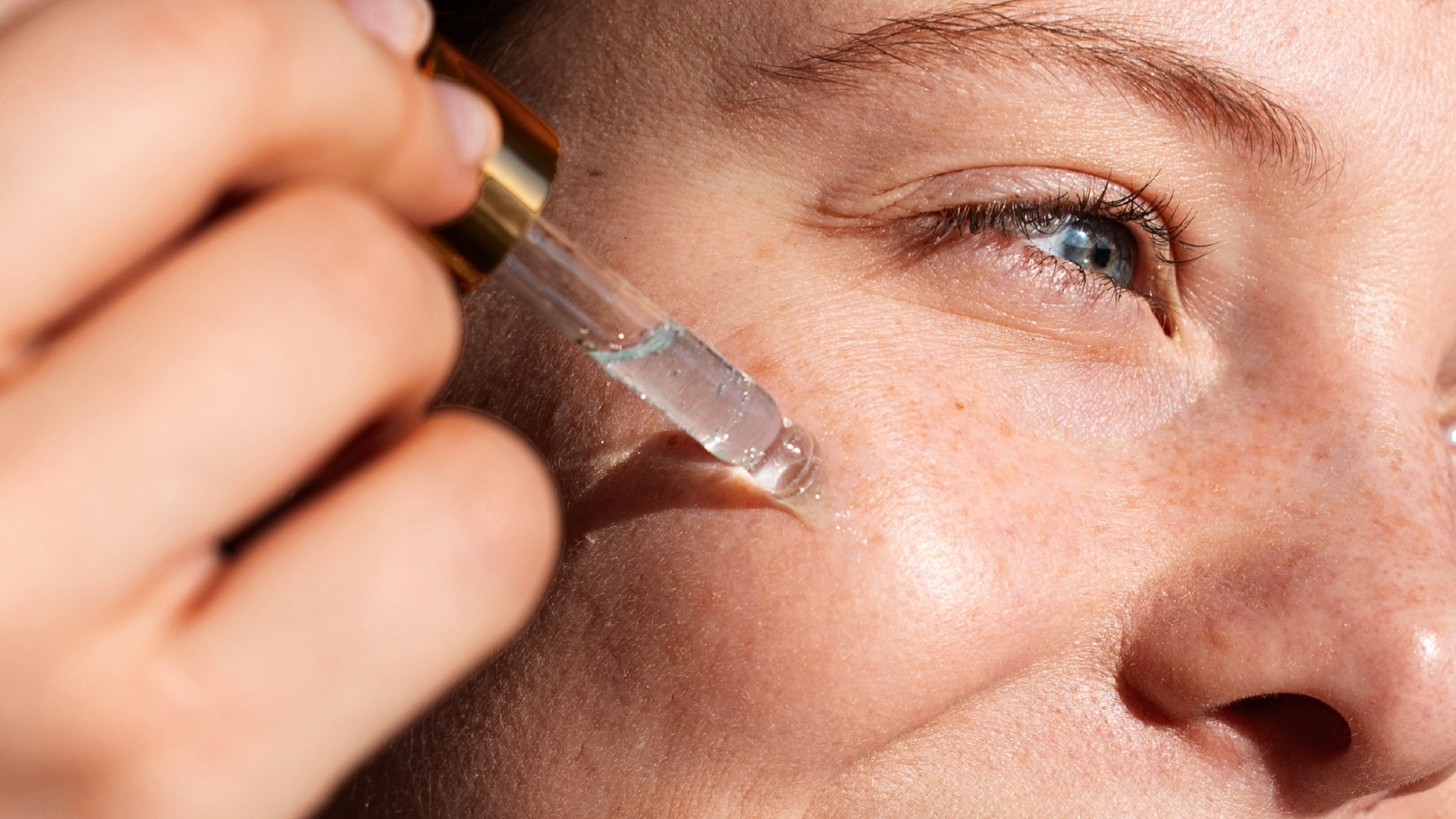
Why won’t my pigmentation respond to skincare?
Pigmentation is one of the most common skin concerns we see in dermatology and also one of the most misunderstood, which is why so many people struggle to treat it.
Many people invest in high-quality skincare, use active ingredients consistently, only to see little to no improvement.
If your pigmentation isn’t improving, it’s usually not about trying harder or buying more products. It’s about understanding what type of pigmentation you have, what’s causing it, and whether topical skincare alone is enough.
What is pigmentation (and where does it sit in the skin)?
Pigmentation occurs when the skin produces too much melanin, the natural pigment responsible for your skin tone. This is often the skin’s response to a trigger such as UV exposure, hormonal influence, inflammation, heat, or injury.
When this pigment is overproduced, it can become unevenly deposited within the skin and can show up as dark spots, patches, or uneven areas of skin tone.
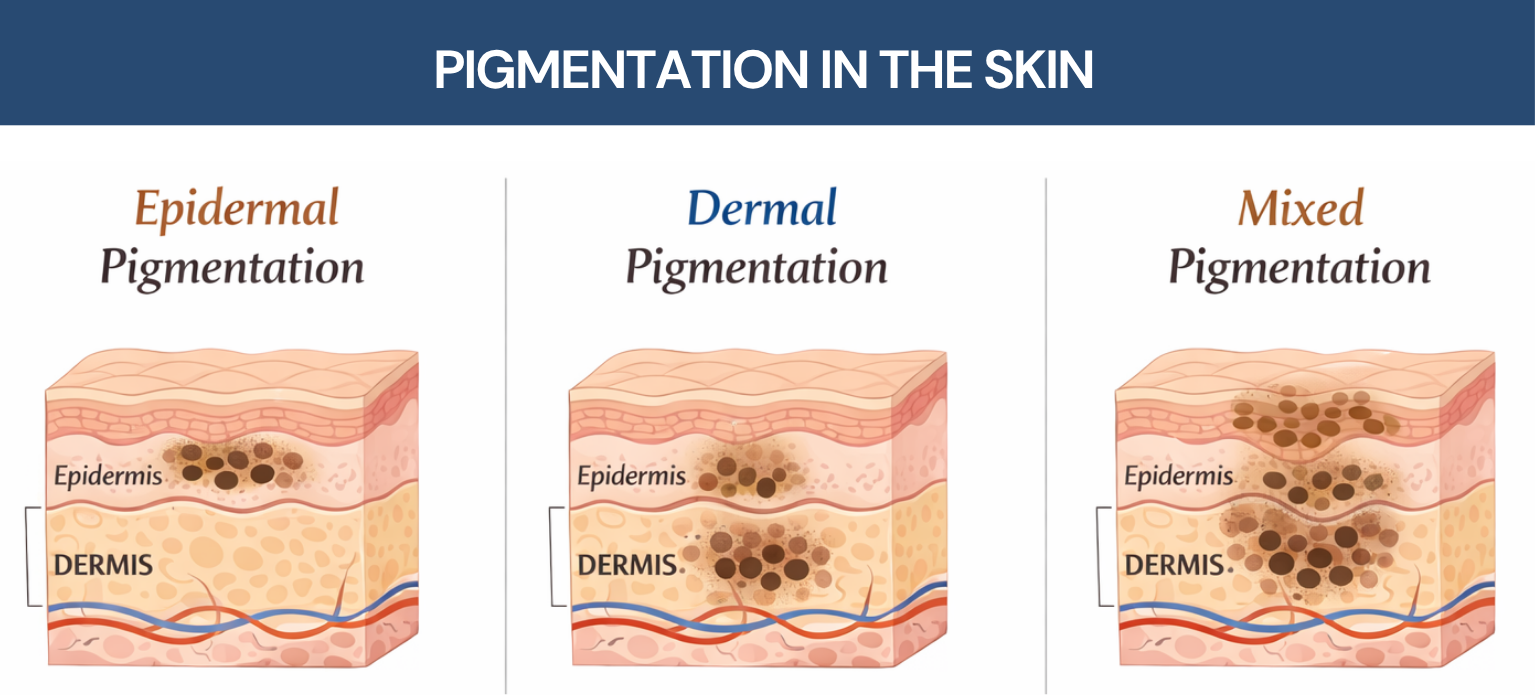
Pigment doesn’t always sit on the surface.
Epidermal pigmentation – Located in the basal layer of the epidermis → More responsive to skincare and superficial treatments
Dermal pigmentation – Sits deeper in the skin (dermis) → Much more resistant to topical products
Mixed pigmentation – Common in melasma → Combination of both layers, making it harder to treat
Let’s explore some of the most common reasons your pigmentation may NOT be responding to skincare.
In many cases, pigmentation requires more than a single product or active ingredient to improve effectively.
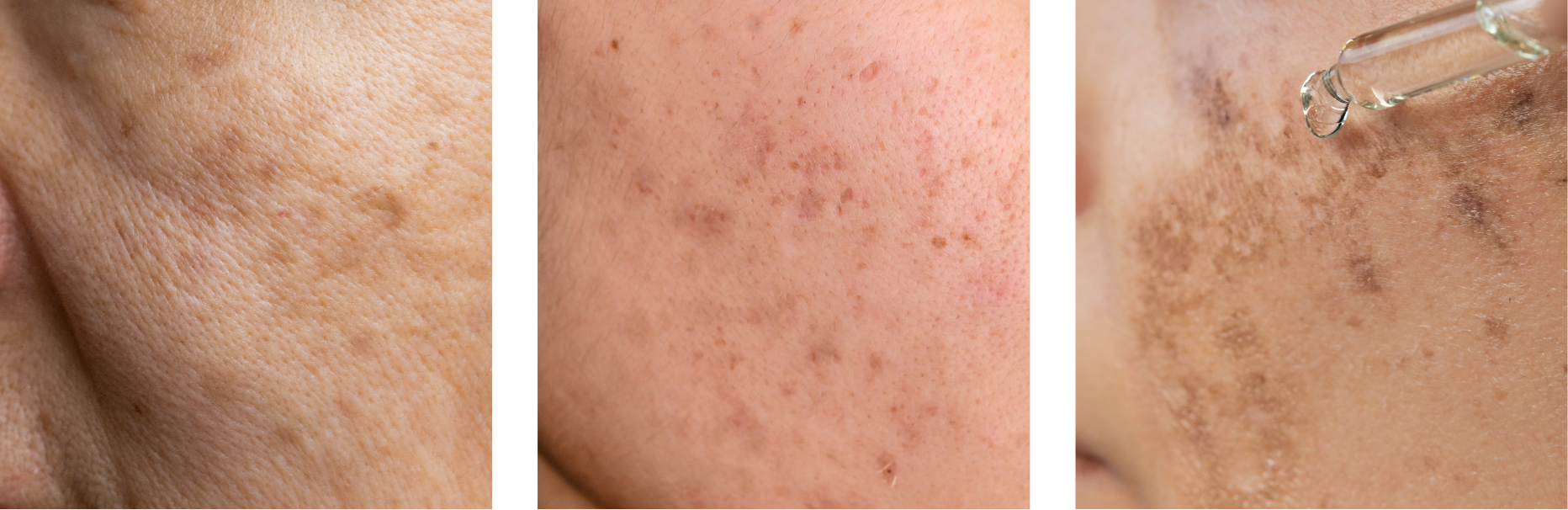
Pigmentation, pigment from acne scarring, melasma.
1. The pigment is too deep.
Most skincare products work within the upper layers of the skin. If pigment is sitting deeper, topical products may only achieve limited improvement, and results often plateau over time.
2. The trigger is still active.
Pigmentation is often ongoing because the underlying trigger has not been addressed. Common drivers include UV exposure, hormonal influences, heat, inflammation, and genetic predisposition. If these factors remain active, pigment production can continue despite consistent skincare.
3. Sun exposure is undoing progress.
Daily SPF is essential when treating pigmentation. Even small amounts of incidental sun exposure can continue to stimulate melanocytes, making pigmentation more persistent and reducing the effectiveness of your skincare or in-clinic treatments.
4. Overuse of active skincare.
Stronger is not always better. Overusing acids, exfoliants, or active ingredients can irritate the skin, trigger inflammation, and in some cases worsen pigmentation, particularly in those prone to post-inflammatory hyperpigmentation (PIH).
Where chemical peels can help.
Chemical peels can be an effective part of treating pigmentation, particularly for superficial pigment on the surface of the skin. They work by exfoliating the outer layers, encouraging cell turnover, and helping to disperse excess pigment.
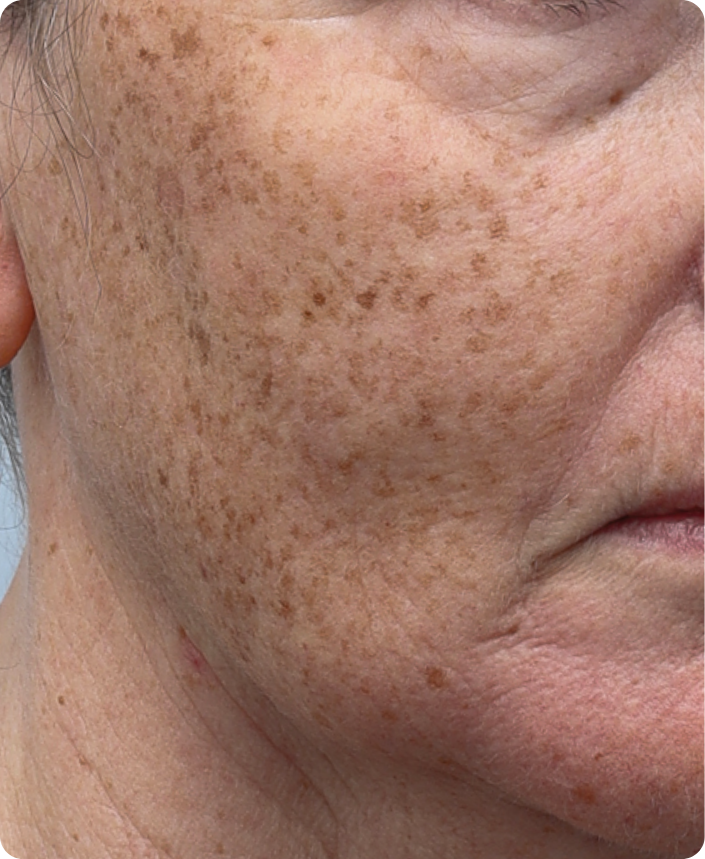
Pigmentation.
Chemical peels are best suited for concerns such as:
Sun damage
Post-inflammatory pigmentation
Uneven skin tone.
However, while peels can deliver noticeable improvement, they are rarely a complete solution for deeper or hormonally driven pigmentation such as melasma. They are most effective as part of a broader treatment plan.
Why does pigmentation come back after treatment?
Even after professional treatment, pigmentation can return. Hyperpigmentation is often persistent, and results may fade over time if the skin is not supported with ongoing care.
When triggers such as UV exposure, hormonal changes, heat, and inflammation continue to activate melanocytes, new or recurring dark spots can develop. Managing pigmentation is usually a long-term process rather than a one-off fix.
Can I just use stronger products at home instead?
This is not recommended without professional guidance. Stronger products can irritate the skin barrier, increase inflammation, and make pigmentation worse. A structured, medically guided approach is usually more effective than simply escalating home treatments.
How a combination plan can work for your pigmentation.
Pigmentation often responds best to combination treatment plans because it is rarely caused by a single factor or located in just one layer of the skin.
A multimodal approach allows different treatments to target different aspects of the condition at the same time, for example, topical skincare may help regulate pigment production, chemical peels can assist with surface pigmentation and skin turnover, while laser or energy-based treatments can address deeper or more resistant pigment.
Just as importantly, strict sun protection helps prevent ongoing stimulation of melanocytes. At the Dermatology Institute of Victoria, these elements are carefully layered and tailored to the individual, taking into account the type of pigmentation, skin type, and lifestyle factors. This combined approach is generally more effective than relying on a single treatment in isolation.
Our treatment plans are tailored and may include:
Medical-grade skincare
This helps support pigment regulation, maintain skin barrier function, and provide ongoing maintenance.
Chemical peels
Assists with reducing superficial pigment, promoting healthy skin turnover, and enhancing the penetration of skincare products.
Laser and light-based treatments
Used where appropriate, including: fractional laser treatments such as Fraxel, vascular and pigment-targeting lasers like Excel V, Pico laser and IPL technologies. These treatments can help improve stubborn pigmentation and overall skin clarity and tone.
Energy-based treatments
RF microneedling can improve overall skin quality and support collagen production and skin structure, although it does not target pigmentation directly.
Strict photoprotection
Daily sun protection is essential for managing pigmentation, including SPF 50+ and physical barriers like hats or shade.
The key takeaway
If your pigmentation isn’t responding to skincare, it’s often because it sits deeper in the skin or the underlying triggers are still active. The most effective approach is layered, combination-based, and guided by a medical professional.
When pigmentation is treated on multiple levels and the factors that drive it are addressed, you are more likely to see visible, lasting improvement in dark spots and overall skin clarity.
Book or give us a call at DIV today and we can help to assess what pigment treatment is right for you.
FAQs
-
Most pigmentation begins in the basal layer of the epidermis, but can extend into the dermis in more complex cases like melasma.
-
A series of treatments is often recommended, depending on the type and depth of pigmentation.
-
Some forms can be long-term or recurrent, but may be managed with appropriate treatment and maintenance. Pigment has what we call “ memory” so it can reoccur over a lifetime in the same spot.
-
They can be tailored, but require careful selection—particularly for sensitive or darker skin types.
-
They may improve pigmentation, but ongoing maintenance is usually required.
-
Yes—heat can stimulate melanocytes and worsen conditions like melasma.
-
Some superficial pigmentation may fade, but others require treatment.
-
Yes—daily SPF 50 + is one of the most important steps in managing pigmentation. It is also the best anti aging cream!