

Gut Health and Skin: What Is the Link Between Them?
The idea that your gut may influence your skin has become one of the most discussed topics in dermatology, wellness, and skincare over the past few years. From acne and rosacea to eczema and inflammation, many people are now asking whether digestive health could play a role in what appears on the skin.
While social media often oversimplifies the relationship, research on the “gut-skin axis” continues to grow. Dermatologists and researchers are increasingly exploring how the digestive and immune systems, inflammation, hormones, and the skin microbiome may interact.
At the same time, it is important to approach this topic carefully. Skin conditions are complex and rarely caused by one single factor. Gut health is only one part of a much bigger picture that may include genetics, hormones, environmental triggers, skincare habits, medications, stress, and underlying medical conditions.
What is the gut-skin axis?
The gut-skin axis refers to the relationship between the gastrointestinal system and the skin. Researchers believe there may be communication between the gut microbiome, immune system, nervous system, and inflammatory pathways that can influence skin health.

The gut microbiome is made up of trillions of microorganisms, including bacteria, fungi, and viruses that naturally live in the digestive tract. These microorganisms help support digestion, immune function, and overall health.
When the balance of these microorganisms changes, sometimes referred to as “dysbiosis,” it may influence inflammation within the body. Inflammation is one of the key pathways associated with many skin conditions. This does not mean poor gut health directly “causes” skin disease, but it may contribute to flare-ups or symptom severity in some individuals.
Can gut health affect acne?
Acne is one of the most commonly discussed skin conditions in relation to gut health and diet.

Acne
Acne itself is multifactorial. Hormones, oil production, genetics, bacteria, inflammation, and skin cell turnover all contribute to its development. However, some research suggests that inflammation linked to diet and digestive health may influence acne in certain people.
For example, diets high in refined carbohydrates and high glycaemic foods may contribute to insulin spikes and inflammatory pathways that can worsen acne in susceptible individuals. Some studies have also explored links between dairy intake and acne severity.
There is growing interest in the relationship between the gut microbiome and skin health, particularly how gut balance may influence inflammation and overall skin function. Research is continuing to explore whether supporting the gut microbiome through diet and probiotics may help support overall skin balance in some individuals. However, probiotics should not be considered a replacement for evidence-based acne management.
If acne is persistent, painful or scarring, it is important to seek professional assessment through a dermatologist or qualified medical practitioner.
The link between Rosacea and digestive health.
Rosacea is another condition often discussed alongside gut health. Rosacea is a chronic inflammatory skin condition that may cause redness, flushing, visible blood vessels, bumps, or sensitivity.
Some studies have explored whether gastrointestinal conditions such as small intestinal bacterial overgrowth (SIBO) may occur more frequently in people with rosacea. Researchers are still investigating these associations.
Triggers for rosacea can vary greatly between individuals and may include:
Heat
Sun exposure
Alcohol
Spicy foods
Stress
Exercise
Certain skincare products
In some people, particular foods may appear to worsen flushing or inflammation. However, restrictive diets are not appropriate for everyone and should not replace medical advice.
At DIV, dermatologists assess rosacea holistically, considering skin symptoms, triggers, skincare routines, and overall health.
Eczema, inflammation and the gut.
Eczema, also known as atopic dermatitis, is associated with inflammation and a disrupted skin barrier. Researchers have explored whether changes in the gut microbiome early in life may influence immune responses linked to eczema.
There is also increasing discussion around the role of food allergies and intolerances in eczema. However, not all eczema is food-related, and unnecessary elimination diets can sometimes lead to nutritional deficiencies.
For children and adults with eczema, management often focuses on:
Protecting the skin barrier
Reducing irritation
Managing inflammation
Avoiding known triggers
Maintaining appropriate skincare
A dermatologist or healthcare professional can help determine whether allergy testing or dietary assessment may be appropriate.
What is the role of the skin microbiome?
Just as the gut has a microbiome, the skin also has its own ecosystem of microorganisms.
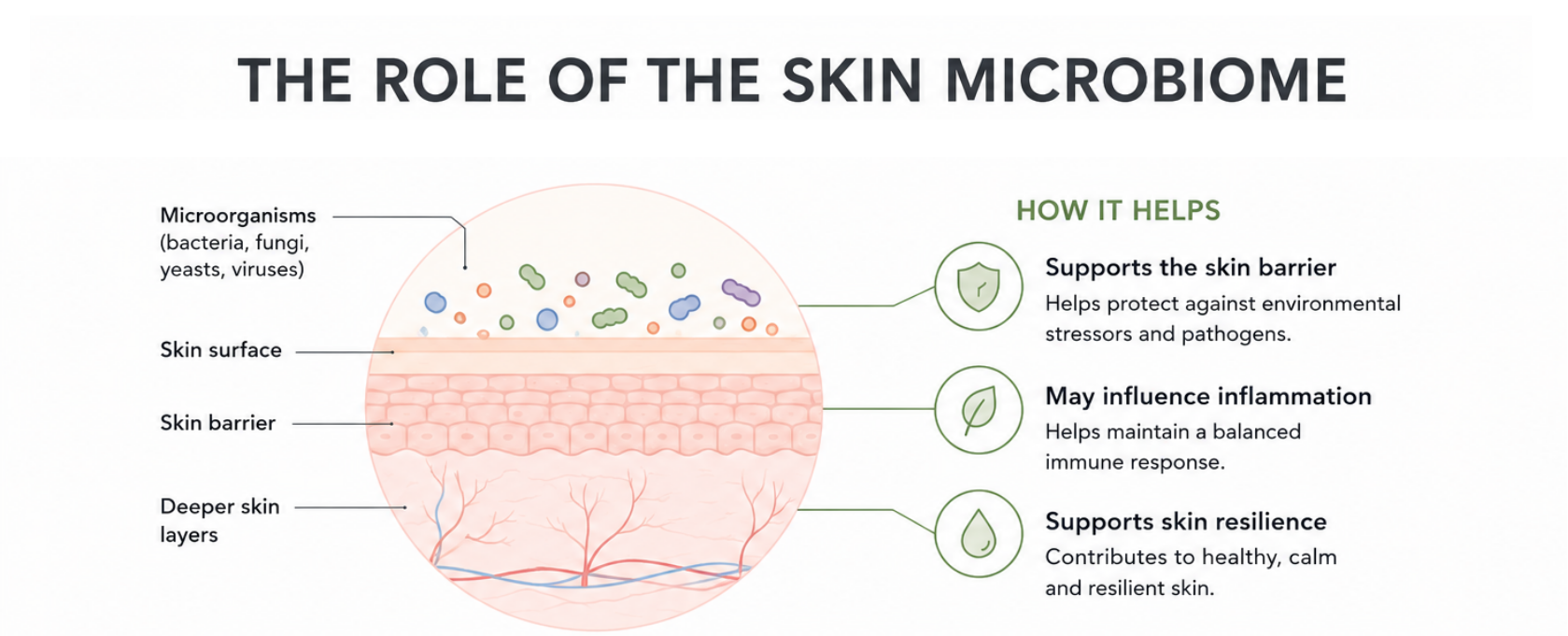
The skin microbiome helps support the skin barrier and may influence inflammation, sensitivity, and skin resilience. Over-cleansing, harsh exfoliation, and inappropriate skincare products may disrupt this balance.
This is one reason many dermatology-led skincare approaches now focus on maintaining skin barrier function rather than aggressively stripping the skin.
Using gentle cleansers, appropriate moisturisers, sun protection, and evidence-based skincare may help support overall skin health. Dermatologist-recommended skincare products are available through Script Skincare, including products selected for sensitive and compromised skin types.
Can probiotics improve skin?
Probiotics are one of the biggest wellness trends linked to gut health and skin. These are live microorganisms that may help support the balance of bacteria within the digestive system.
Research into probiotics and skin health is ongoing. Some studies have explored whether probiotics may assist inflammatory skin conditions, but results remain mixed, and more evidence is needed. The chemists and other “health stores” are full of these supplements, but it is important to remember:
Not all probiotics are the same
Different strains may have different effects
Supplements can often have “filler” products in them, reducing the efficacy
Probiotics are not a replacement for medical treatment
There is no strict regulatory governance in Australia currently for supplements
Supplements prescribed by healthcare professionals or recommended by your GP are generally the most appropriate option. Rather than relying on “miracle” supplements, many dermatologists encourage a balanced approach to overall health.
Foods that may support skin health.
While no single food can “fix” skin conditions, general dietary patterns may influence inflammation and skin health over time.

A balanced diet rich in vegetables, fruit, fibre, healthy fats, lean proteins, and Omega-3 fatty acids can not only support general well-being but also help support skin health. Hydration, sleep, stress management, and sun protection also remain important factors in maintaining healthy skin.
If dietary changes appear to trigger or worsen skin symptoms, it may be worth discussing this with a healthcare professional before making major changes.
Stress, the gut and the skin.
Stress is another major factor within the gut-skin conversation.
The nervous, immune, digestive, and skin systems are closely linked. Stress may influence gut symptoms, inflammation, hormonal pathways, and skin flare-ups. Many people notice worsening of conditions such as Acne, Psoriasis, Rosacea, Eczema or Hives during periods of stress. This highlights how skin health is rarely isolated to one single cause. Often, multiple factors interact together.
Why social media can oversimplify the gut-skin link.
One of the challenges with the popularity of “gut health” content online is that it can sometimes create unrealistic expectations or fear around food and skincare.
Claims that all acne is caused by the gut, or that expensive supplements can “heal” skin conditions, are not supported by strong evidence.
Similarly, restrictive diets promoted online may not be safe or appropriate for everyone.
The most effective approach is usually a balanced and evidence-based one:
Professional assessment
Accurate diagnosis
Individualised treatment plans
Appropriate skincare
Consideration of overall health and lifestyle factors
When should you see a dermatologist?
If you are experiencing ongoing skin concerns, it is important not to self-diagnose based purely on online information.
A dermatologist can assess:
Whether a skin condition is inflammatory, hormonal, allergic, infectious, or genetic
Potential triggers
Appropriate skincare
Whether additional medical investigations may be required
Persistent redness, acne, rashes, itching, pigment changes, or skin lesions should always be properly assessed by a medical professional. The relationship between gut health and skin is an evolving area of research that continues to attract significant interest.
While the gut-skin axis may play a role in inflammation and certain skin conditions, skin health is rarely determined by a single factor. Genetics, hormones, environment, stress, skincare habits, and medical conditions can all contribute.
Rather than chasing trends or quick fixes, a balanced and evidence-based approach is usually the most helpful. Supporting overall well-being, maintaining good skincare habits, and seeking professional advice when needed remain key parts of healthy skin management.
At the Dermatology Institute of Victoria, patients can access dermatologist-led assessment and advice for a wide range of skin concerns, including inflammatory skin conditions, acne, rosacea, eczema, and skin health management. Book a consultation with one of our dermatologists or practitioners today to talk about your skin health.